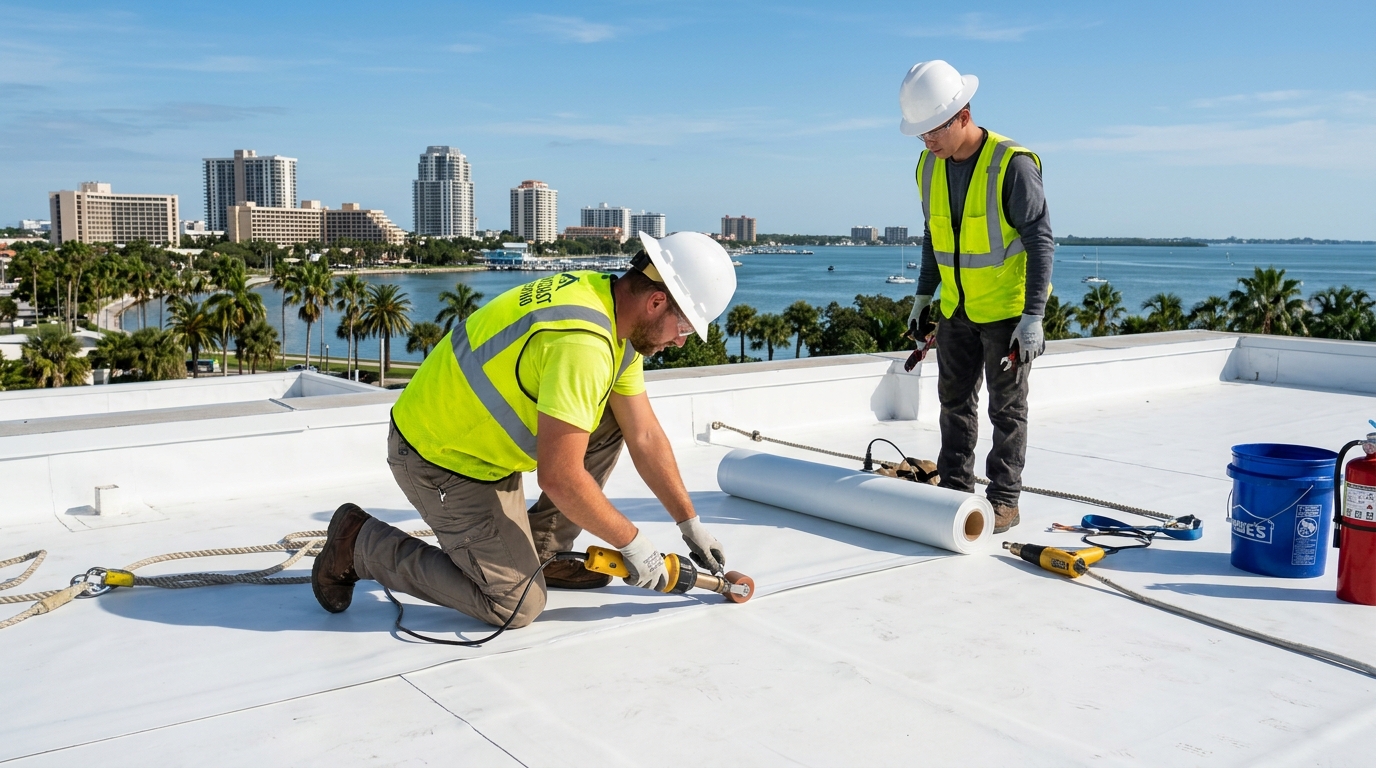
Emergency Roof Leak Repair & Active Water Containment in Portland, OR
When water penetrates roofing materials during a prolonged Pacific Northwest atmospheric river, structural degradation begins within hours. Ceiling drywall sags and loses cohesion, fiberglass and blown-in cellulose attic insulation compress and lose R-value, and moisture threatens living areas with electrical short circuits. Roof Expert USA dispatches independent, licensed Oregon roofing contractors equipped with non-destructive FLIR thermal imaging diagnostics to pinpoint hidden moisture pathways and implement immediate physical containment across Portland, Beaverton, Hillsboro, and Lake Oswego.
Protocol 3: Full Compliance with Oregon Residential Specialty Code (ORSC Chapter 9) and local CCB licensing standards.
Protocol 4: Independent Oregon CCB Contractor Dispatch ensuring direct voice routing and verified liability insurance.
1. Regional Microclimate Dynamics & Severe Storm Exposure in Portland
The Willamette Valley's maritime climate presents severe challenges to residential and commercial roof assemblies. Receiving upwards of 43 inches of rainfall over 155 rainy days each year, Portland structures experience prolonged saturation without dry intervals. Atmospheric rivers generate sustained horizontal wind-driven rain that tests the limits of lap joints, valley flashings, and sidewall step flashings. Furthermore, dense tree canopies of Douglas fir and bigleaf maple shed needles and organic debris that retain moisture, fostering rampant moss colonization that physically wedges shingle tabs open and pulls water backward uphill through capillary action. Dispatched contractors evaluate these regional forces to stop water ingress at the exterior barrier.
Locating the exact point of exterior failure during active rainfall requires sophisticated non-destructive diagnostics because water routinely travels along sloped rafters, ceiling drywall paper, and conduit runs before dripping through a ceiling fixture. Dispatched technicians deploy calibrated FLIR high-resolution thermal imaging cameras to identify subtle evaporative cooling signatures, illuminating hidden moisture plumes traveling through enclosed rafter bays long before drywall blisters burst. Pinless radio-frequency moisture meters map structural saturation boundaries across OSB decking and wood framing without puncturing interior vapor barriers, establishing verified loss scopes for insurance adjusters.
Emergency containment follows a methodical, step-by-step restoration workflow. First, technicians secure the exterior breach using commercial-grade ASTM D1970 self-adhering polymer-modified bitumen membranes that create an immediate self-healing seal around existing fasteners, or apply wet-surface elastomeric polymer compounds engineered to bond underwater. In severe wind-damage or tree-strike events, heavy-duty 12-mil reinforced polyethylene tarps are secured using 2x4 lumber battens screwed directly into structural rafters—never nailed blindly into open shingles—preventing wind tear-off during 60+ mph Columbia Gorge windstorms. Once the immediate rain threat is halted, damaged shingles, rotted wood decking, and compromised flashings are surgically prepared for permanent restoration.
4. Oregon Construction Contractors Board (CCB) & ORSC Compliance
All dispatched roofing professionals maintain active licensing with the Oregon Construction Contractors Board (CCB) under Oregon Revised Statutes Chapter 701. Work conforms strictly to the Oregon Residential Specialty Code (ORSC Chapter 9) and local municipal amendments enforced by the City of Portland Bureau of Development Services. This includes mandatory self-adhering ice-and-water underlayment installations extending 24 inches inside the interior heated wall line and adherence to manufacturer technical specifications to preserve commercial warranty coverage.
Property owners can prevent catastrophic structural leaks through proactive seasonal maintenance. Ensure gutters, downspouts, and valley channels are thoroughly cleared of pine needles, leaves, and moss slush before the rainy season commences in October. Schedule bi-annual non-destructive zinc or copper sulfate moss treatments to inhibit vegetative growth without abrasive pressure washing that strips protective ceramic mineral granules from asphalt shingles. Promptly replace brittle neoprene plumbing pipe boots and inspect chimney flashings after severe winter wind events.
Willamette Valley On-Site Triage & Dispatch Safety Protocols
When an active roofing failure threatens your property during prolonged Pacific Northwest rainfall, following standardized safety procedures prevents personal injury and minimizes secondary structural damage while dispatched crews are en route:
Strict Fall Hazard Prevention: Never attempt to access a roof during rain, windstorms, or freezing cold snaps. Wet moss-covered shingles across Multnomah County become as slick as ice, creating severe slip-and-fall hazards. Dispatched professional crews operate under strict OR-OSHA Division 2 fall protection standards with full-body harnesses and roof anchors.
Electrical Circuit Shutdown: Immediately switch off electrical circuit breakers governing any living areas where water is dripping from ceilings, light fixtures, or wall outlets to avert electrical shorts and structure fires.
Controlled Interior Drainage: Relieve trapped water weight behind bulging ceiling drywall by puncturing the center of the blister with a small nail or screwdriver and catching the flow in large buckets, preventing catastrophic ceiling collapse.
Independent Referral Model Assurance: All dispatched contractors are independent, licensed, and registered third-party roofing professionals under Oregon CCB regulations. Estimates, insurance scopes, and physical repairs are contracted directly with the assigned roofing contractor.
Frequently Asked Questions • Active Roof Leak Containment
How quickly can emergency containment be deployed during an active Portland atmospheric river?
Our dispatch desk operates 24/7 to connect property owners with on-call independent CCB roofing technicians. Response times vary based on regional weather severity, technician safety, and call volumes, but verbal triage begins immediately to help you isolate electrical hazards and control water flow.
Will emergency roof patching hold up during continuous rainfall?
Yes. Technicians use commercial polymer-modified wet-surface asphalt mastics and rubberized membranes engineered specifically to adhere to saturated substrates under driving rain, preventing water from penetrating framing until dry weather permits permanent architectural repairs.
Does homeowner insurance cover sudden roof leak containment in Oregon?
Most standard Oregon homeowners insurance policies cover emergency mitigation measures necessary to prevent secondary damage caused by sudden weather events, windstorms, or falling limbs. Dispatched contractors compile itemized photo documentation to support your claim.
Need Immediate Emergency Assistance for Active Roof Leak Containment?
Our Portland dispatch desk routes qualified, CCB-licensed contractors 24/7. Strictly zero web forms—speak directly with a live dispatch coordinator right now.