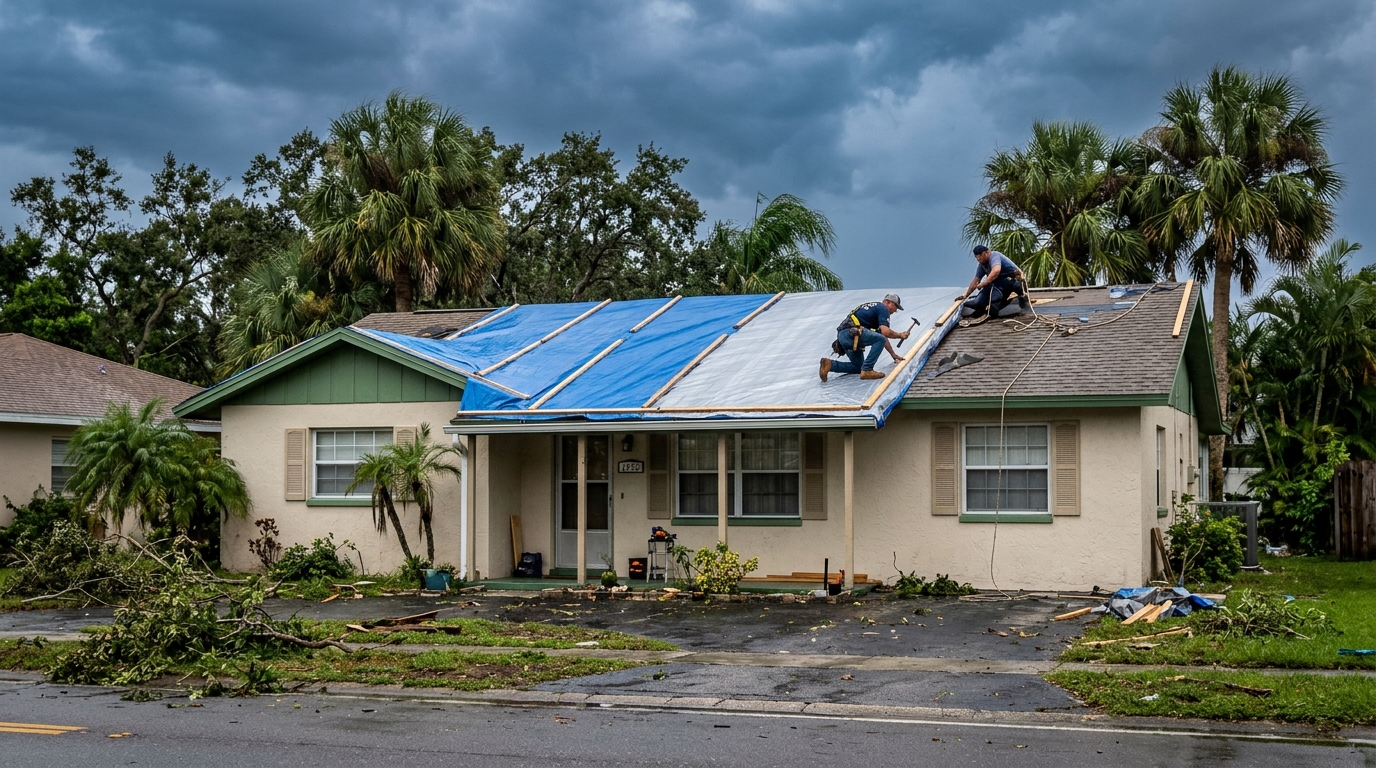
Emergency Roof Tarping & Severe Storm Containment in Portland, OR
When severe windstorms topple mature Douglas fir limbs onto your roof or tear away large sections of roofing shingles, immediate weather containment is vital to prevent catastrophic interior water damage. Pacific Northwest winter storms bring continuous rain behind storm fronts, making delay disastrous. Roof Expert USA dispatches emergency tarping specialists across Portland and the Willamette Valley to mechanically secure heavy-duty reinforced weather barriers that endure sustained winds and driving rain.
1. Regional Microclimate Dynamics & Severe Storm Exposure in Portland
Portland's urban forest features massive conifers and deciduous trees that pose severe hazards during winter windstorms. When moisture-saturated soils in Multnomah and Clackamas counties loosen tree root systems, sudden gusts from Pacific storms or Columbia River Gorge wind shears can snap large limbs or topple entire trees onto roof planes. The resulting structural impacts fracture dimensional rafters, shatter plywood roof decking, and rip through roofing membranes. Immediate emergency tarping provides a watertight structural shield that arrests water infiltration while engineers assess framing stability.
Emergency crews assess roof breaches using strict safety and structural triage protocols. Before stepping onto storm-damaged surfaces, technicians inspect rafter deflection and load-bearing wall integrity from the interior. Calibrated FLIR thermal imaging cameras scan surrounding ceiling areas to map the perimeter of moisture penetration. Certified technicians locate solid structural framing members to anchor tarping battens, ensuring that temporary weather coverings do not rely on damaged sheathing that could fail under heavy wind suction or snow loading.
Tarping execution adheres to commercial storm restoration engineering standards. Dispatched technicians utilize premium 12-mil cross-laminated high-density polyethylene tarps with heavy UV inhibitors. The tarp is cut to extend a minimum of 4 feet past the perimeter of damage on all sides, extending completely over the roof ridge to eliminate wind uplift. Tarps are secured using 2x4 wooden battens anchored with corrosion-resistant 3-inch exterior structural screws driven directly into roof rafters. Battens are rolled inside the perimeter edges to create watertight water stops, preventing wind from catching underneath and ripping the barrier away.
4. Oregon Construction Contractors Board (CCB) & ORSC Compliance
All dispatched emergency tarping crews are licensed with the Oregon CCB and adhere strictly to Oregon OSHA (OR-OSHA) Division 2 fall protection standards. Technicians operate with full-body harnesses, rope grabs, and certified roof anchor brackets rated for 5,000 lbs of tensile pull. Complete photographic documentation of the initial damage, fallen timber, structural breaches, and completed tarp installation is prepared in insurance-standard Xactimate format to support homeowner claims under ORS Chapter 742.
Property owners facing storm emergencies should immediately contact their insurance carrier to open a claim, as most policies cover emergency mitigation costs necessary to protect the property from secondary water ruin. Homeowners should avoid climbing onto damaged, wet roofs, as wet shingles and moss create extreme slip hazards. Regularly inspect overhanging tree branches within 10 feet of the roofline and have certified arborists trim compromised limbs before winter storm season.
Willamette Valley On-Site Triage & Dispatch Safety Protocols
When an active roofing failure threatens your property during prolonged Pacific Northwest rainfall, following standardized safety procedures prevents personal injury and minimizes secondary structural damage while dispatched crews are en route:
Strict Fall Hazard Prevention: Never attempt to access a roof during rain, windstorms, or freezing cold snaps. Wet moss-covered shingles across Multnomah County become as slick as ice, creating severe slip-and-fall hazards. Dispatched professional crews operate under strict OR-OSHA Division 2 fall protection standards with full-body harnesses and roof anchors.
Electrical Circuit Shutdown: Immediately switch off electrical circuit breakers governing any living areas where water is dripping from ceilings, light fixtures, or wall outlets to avert electrical shorts and structure fires.
Controlled Interior Drainage: Relieve trapped water weight behind bulging ceiling drywall by puncturing the center of the blister with a small nail or screwdriver and catching the flow in large buckets, preventing catastrophic ceiling collapse.
Independent Referral Model Assurance: All dispatched contractors are independent, licensed, and registered third-party roofing professionals under Oregon CCB regulations. Estimates, insurance scopes, and physical repairs are contracted directly with the assigned roofing contractor.
How long can a professionally installed emergency tarp remain on an Oregon roof?
A commercial 12-mil cross-laminated tarp anchored with rafter-screwed 2x4 lumber battens is engineered to provide secure weather protection for 60 to 90 days, giving homeowners ample time to negotiate insurance estimates and schedule permanent construction.
Will tarping a roof cause additional damage to surrounding shingles?
Professional crews roll the tarp perimeter into wooden battens and anchor directly into structural rafters or use non-penetrating sandbag counter-weights on low pitches, avoiding blind nailing into good shingles that would cause new leak points.
What should I do if a large tree branch is still resting on the roof?
Do not attempt to move the branch yourself. Call our dispatch desk immediately. We coordinate with contractors who work alongside certified tree removal specialists equipped with cranes to lift limbs safely before tarping begins.
Need Immediate Emergency Assistance for Post-Storm Emergency Tarping?
Our Portland dispatch desk routes qualified, CCB-licensed contractors 24/7. Strictly zero web forms—speak directly with a live dispatch coordinator right now.